How it is arranged
The Oven Inside a Wolf Range
A range keeps its oven inside a freestanding appliance instead of a joinery column, so the aperture it stands in and the counter above it settle most of how a repair gets done. Wolf Appliance Repair Denver reads the cavity from the front first: (720) 807-8323.
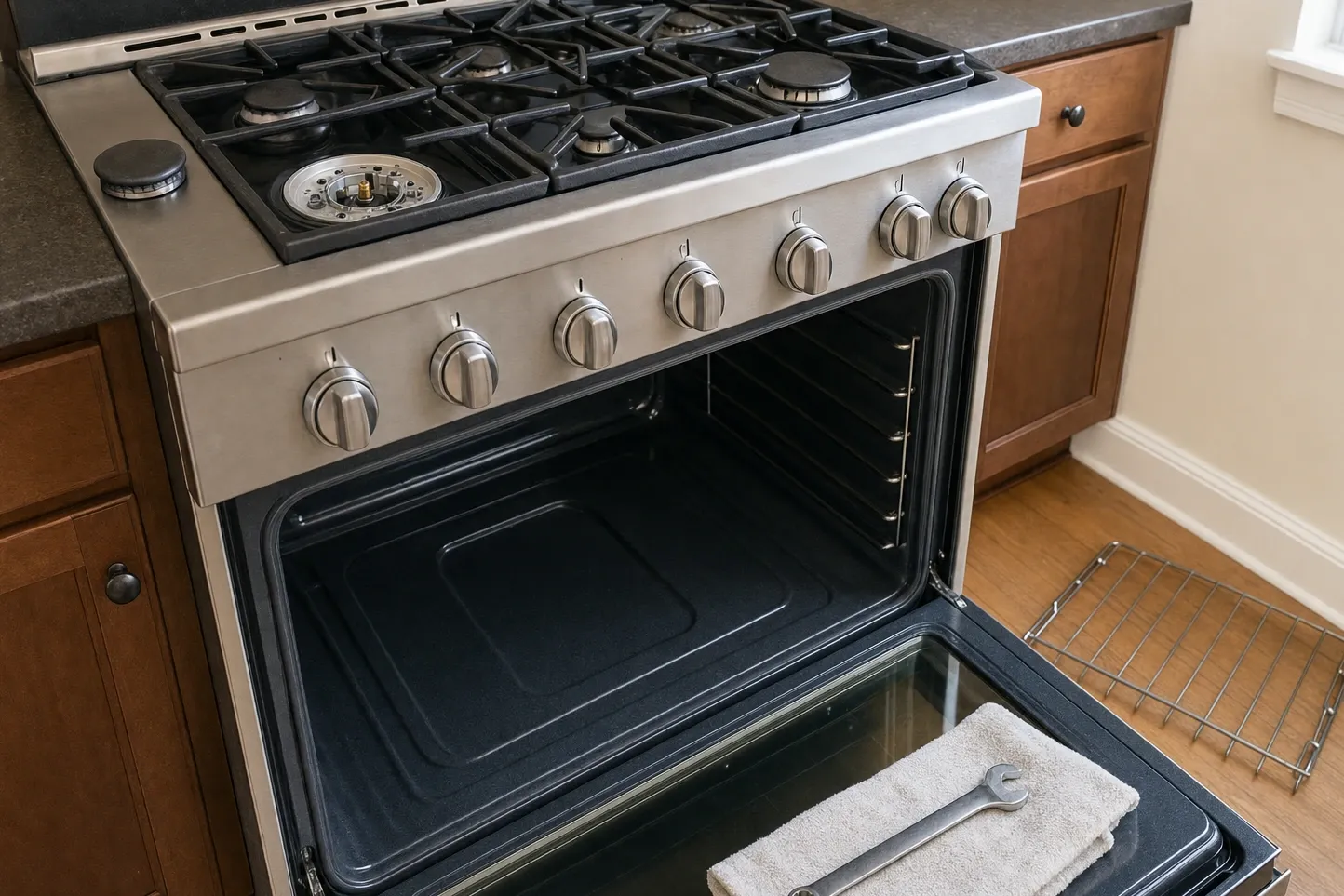
The passport
- What it is
- An oven cavity inside a range, with a cooktop deck above it
- Where its heat comes from
- In a gas range, a burner sitting beneath the floor of the cavity
- Under the cavity floor
- A panel, and below it the valve, orifice, burner tube and igniter
- An owner stops at
- Racks, the door and the cavity surfaces. Nothing beneath that floor panel
- Behind the appliance
- A gas connection. Moving a range off it is a gas fitter's side of the work
- Typical round here
- Capitol Hill kitchens where a range went into an aperture cut in an older run
A cavity with two things attached to it
Take the deck away and a range oven is the same box as a built-in: sealed cavity, sensor, a door that has to seal, racks on ladders. The difference is what hangs off it. Wolf’s own description of its gas range pairs burners above with a gas oven below, and that pairing is why an identical fault behaves unlike its column-mounted twin. No joinery holds it, no trim comes off, and the services arrive at the appliance rather than at the cavity.
The half nobody opens
The floor of a gas oven is a panel rather than the bottom of the box, and the burner runs beneath it with a valve, an orifice, a tube and an igniter ahead of it. Not one link in that chain is a home job. Lifting the panel is exactly where an owner check ends: what is left before ringing is watching — whether the cavity ever reaches the setting, whether it lights late, and whether it began the week other trades were in the kitchen. A cavity that lights with a thump is reported, not lived with.
What the surround has to do with it
In a column the joinery is the obstacle; around a range it is the counter, the flooring and the two cabinet faces either side. Between them they settle whether a part is changed where the appliance stands or whether the range travels out of its aperture first — worth knowing when the call is made, not when the van is in the drive.
What goes wrong, and what that costs
What it turns out to be Parts and labour
- Deck above lights as usual and the cavity below never warms up
- $180–$460 Igniter or spark module
- Cavity settles under the number it was set to, bake after bake
- $190–$440 Oven thermostat or sensor calibration
- Oven lights late and announces itself with a thump
- $260–$620 Burner valve or orifice service
- Where the cavity has a fan, it rumbles or stalls mid-cycle
- $290–$660 Convection fan or motor
- Door has sagged and heat is tracking up the front of the range
- $270–$710 Door hinge, glass or seal
Ranges, not starting prices — what moves inside one is the part and how far the oven has to come out of its column. The $89 diagnosis comes off the figure once you approve it.
Asked about this one
- Can the oven in a range be repaired without moving the appliance?
- Most of it, yes. Door, hinges, seal, sensor and floor panel can all be got at from the front while the appliance sits in its run. What pulls a range out of the line is work behind or underneath it, and the diagnosis decides that, not the booking.
- The cooktop works but the oven stays cold. What does that tell you?
- In a gas range it says the supply is reaching the appliance, which clears the largest question at once. What it cannot say is which link in the oven's own chain has given up, because that cavity has an igniter, a valve and a burner that belong to it alone.